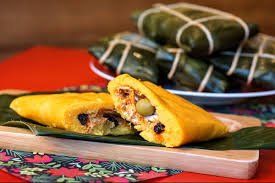

There’s a moment — you unwrap a banana leaf, and a cloud of smoky, spiced steam hits your face before you even take a bite. That’s hallaca. And once you’ve experienced it, you’ll understand why Venezuelans travel across cities (and sometimes continents) chasing the best version they can find.
Hallaca is Venezuela’s crown jewel of festive cooking. It’s a layered, deeply flavored corn dough parcel stuffed with a slow-cooked stew of beef, pork, and chicken, finished with olives, raisins, capers, and roasted peppers — then wrapped in fragrant plantain leaves and boiled until every flavor melts together. It’s part food, part family ritual, part cultural identity. No wonder searching for the best hallaca near me has become a growing obsession for Venezuelan expats and curious food lovers worldwide.
This guide will help you find, taste, and even make the best hallaca of your life.
Where in the World Can You Find the Best Hallaca?
La Margarita, Doral — Miami, USA
This small Venezuelan market in Doral, Florida has become a hallaca pilgrimage spot. Their version features a tomato beef stew layered with tender shredded chicken, pork, onions, raisins, olives, sliced red peppers, and almonds — all nestled in a perfectly sealed banana leaf parcel. They even offer a vegan version with tofu replacing the meat, with zero compromise on the flavor complexity. Takeout only, which means you boil it at home and the smell fills your entire kitchen like it’s Christmas morning in Caracas.
Dulce Tropical — North Miami, USA
Dulce Tropical is a Venezuelan bakery that does hallaca with rare consistency. The Infatuation called it one of the best you’ll find in the city. The filling of chicken, beef, pork, and olives is deeply flavored and never dry — the banana leaf wrapping is tight enough that you can cook it at home without it falling apart. Don’t leave without grabbing one of their Venezuelan empanadas too, fried to golden perfection.
Arepa & Co — London, UK
London’s most celebrated Venezuelan restaurant has multiple locations across the city — Bethnal Green, Elephant Park, Haggerston, and Brixton. During the Christmas season, they sell frozen hallacas stuffed with slow-cooked chicken, pork, and beef, enhanced with roasted peppers, onions, olives, and raisins, all wrapped in banana leaves. You drop them into boiling water for 40 minutes and serve hot. Simple. Authentic. The Haggerston location, perched beside Regent’s Canal, gives the whole experience a rather beautiful setting.
Liqui-Liqui — South West London, UK
This little Venezuelan gem in South West London makes hundreds of hallacas every Christmas season for the Venezuelan community scattered across the UK. Their classic Caracas recipe sticks strictly to beef, chicken, and pork — no potatoes, eggs, or chickpeas, which is their point of pride. They also produce an exceptional vegan version filled with mixed vegetables, chickpeas, and beans, balanced with raisins, capers, and olives. Available frozen online with DHL delivery, so you can have an authentic London hallaca shipped to your door anywhere in the country.
Budare Bistro — Miami, USA
Named after the circular griddle used to make arepas, Budare Bistro brings serious Venezuelan kitchen credentials to every dish on its menu. Their hallacas are assembled in the traditional way: masa flattened on smoked banana leaves, generous spoonfuls of guiso added, then garnished with raisins, capers, olives, onions, and strips of chicken before being folded into tight rectangular packages and tied with twine. The bright, lively interior — plastered with photos of Caracas’ El Ávila National Park — makes eating here feel like a little cultural trip.
El Arepazo 2 — Miami, USA
With three locations across Miami (Kendall, Doral, and Weston), El Arepazo 2 is the kind of no-fuss neighborhood spot where Venezuelans actually go on weekdays. They sell hallacas individually, making it easy to try before committing to a larger order. Affordable, consistent, and completely unassuming — which is often exactly the sign you’ve found something real.
Best Places to Find Hallaca in the USA
The Venezuelan diaspora has made its mark on American cities, and if you know where to look, genuinely outstanding hallacas aren’t hard to find.
Miami, Florida is the undisputed hallaca capital of the United States. The city’s large Venezuelan community has produced dozens of restaurants and markets where the dish is prepared with care. Doral is the neighborhood to start in — it’s sometimes called “Little Venezuela” for good reason.
New York City has a solid Venezuelan restaurant scene too. Spots like Patacon Pisao, Maracaibo, and Cachapas Y Mas NYC have all been praised on Yelp and TripAdvisor for their authentic Venezuelan flavors. During the holiday season, it’s worth calling ahead to ask specifically whether they’re serving hallacas that week.
Houston and Dallas both have significant Venezuelan communities, so check Google Maps for Venezuelan restaurants in your area and filter by recent reviews mentioning hallaca specifically.
Pro tip: Many Venezuelan restaurants only prepare hallacas seasonally — particularly November through January. If you’re searching outside holiday season, call ahead. Places that offer them year-round often make fresh batches on weekends only.
Best Places to Find Hallaca in the UK
London is where the UK’s Venezuelan food scene is concentrated, though the community and its food is slowly spreading to other cities.
Arepa & Co remains the most established name, with four London locations and an online shop where you can order frozen hallacas for home delivery during the festive season. Their Elephant Park venue is particularly popular with the South London crowd.
Liqui-Liqui in South West London ships nationwide via DHL, which is genuinely useful if you’re in Manchester, Birmingham, or Edinburgh and craving the real thing. Their classic Caracas-style hallaca has developed a loyal following among both expats and adventurous non-Venezuelan food lovers.
Peter’s Panas is another Venezuelan operation in London that serves hallaca alongside their famous arepas, tequeños, and empanadas. They also do catering for events, so if you’re planning a gathering, it’s worth exploring their menu.
How to find hallaca near you in the UK: Open Google Maps, type “Venezuelan restaurant” followed by your city name. Check the reviews and specifically look for mentions of hallaca. During December, even smaller Venezuelan-owned bakeries and home cooks sometimes advertise on community Facebook groups and Nextdoor.
What Exactly Is Hallaca — And What Makes It Special?

Think of hallaca as Venezuela’s answer to the tamale — but richer, more complex, and frankly more labor-intensive. The word itself likely has indigenous roots, and the dish traces back to Venezuela’s colonial period. The most widely told origin story is that it was created by enslaved Africans who gathered the leftover scraps from their Spanish masters’ Christmas feasts — bits of beef, pork, chicken — and packed them into seasoned cornmeal dough wrapped in banana leaves. Over generations, the dish was refined, elevated, and claimed as a national treasure.
The main ingredients in a traditional hallaca include:
- Corn dough (masa): Made with pre-cooked cornmeal, colored golden-orange with annatto seeds (onoto) and lard or vegetable fat
- Guiso (meat stew): Slow-cooked beef, pork, and chicken with onions, garlic, bell peppers, tomatoes, capers, olives, raisins, mustard, and wine
- Adornos (garnishes): Sliced peppers, onion rings, sometimes almonds or bacon strips
- Banana or plantain leaves: The wrapper that gives hallaca its distinctive smoky, vegetal aroma
A high-quality hallaca has a thin, soft masa that doesn’t crack or feel dense, and a filling that’s wet enough to stay juicy but thick enough to hold its shape when sliced. A bad one has dry filling, thick rubbery dough, or — worst of all — no detectable banana leaf aroma at all.
How to Make Hallaca at Home — Step by Step
Prep time: 3 hours | Cook time: 1 hour 15 minutes | Makes: 10–12 hallacas
Ingredients
For the guiso (make a day ahead):
- 500g beef (bottom round or similar), diced
- 300g pork loin, diced
- 300g chicken thighs, boneless
- 1 large onion, finely chopped
- 4 garlic cloves, minced
- 2 sweet red peppers, diced
- 1 tbsp tomato paste
- 50g raisins
- 50g pitted green olives
- 2 tbsp capers
- 100ml sweet red wine (port or Marsala works)
- 1 tsp mustard
- Salt, cumin, and black pepper to taste
For the masa:
- 500g pre-cooked white cornmeal (Harina P.A.N.)
- 750ml warm chicken broth
- 3 tbsp lard or vegetable shortening (colored with annatto seeds)
- Salt to taste
For assembly:
- 12 large banana or plantain leaves (fresh or frozen)
- Kitchen twine
Steps
- Make the guiso the day before. Brown the meats in batches in a large pot. Add onion, garlic, and peppers. Cook until softened, then add tomato paste, wine, mustard, raisins, olives, capers, and seasonings. Simmer on low for 45 minutes until thick. Let it rest overnight uncovered — this step is not optional. The resting develops the flavor dramatically. Pro tip: taste it the next morning and adjust seasoning before assembling.
- Prepare the banana leaves. Wipe clean with a damp cloth, remove the central stem (this is key — it prevents the leaf from folding properly), and cut into 30cm rectangles. Pass briefly over a gas flame or hot pan to make them pliable.
- Make the masa. Heat lard with a tablespoon of annatto seeds on low until the fat turns deep orange, then strain. Combine cornmeal with warm broth, the colored lard, and salt. Knead until soft, smooth, and not sticky — similar to a soft playdough. The masa should be silky, not grainy. If it cracks when you press it, add a little more broth.
- Set up your assembly station. Lay out: masa, guiso, garnishes (peppers, onion rings), banana leaves, and twine. Getting organized before you start saves enormous time.
- Assemble. Place a banana leaf on your work surface. Spread a thin, even circle of masa in the center (about 20cm wide — thinner than you think). Add 2 heaped tablespoons of guiso, then a few strips of pepper and onion. Common mistake: overfilling. Resist the urge. An overfilled hallaca won’t seal properly and will fall apart in the water.
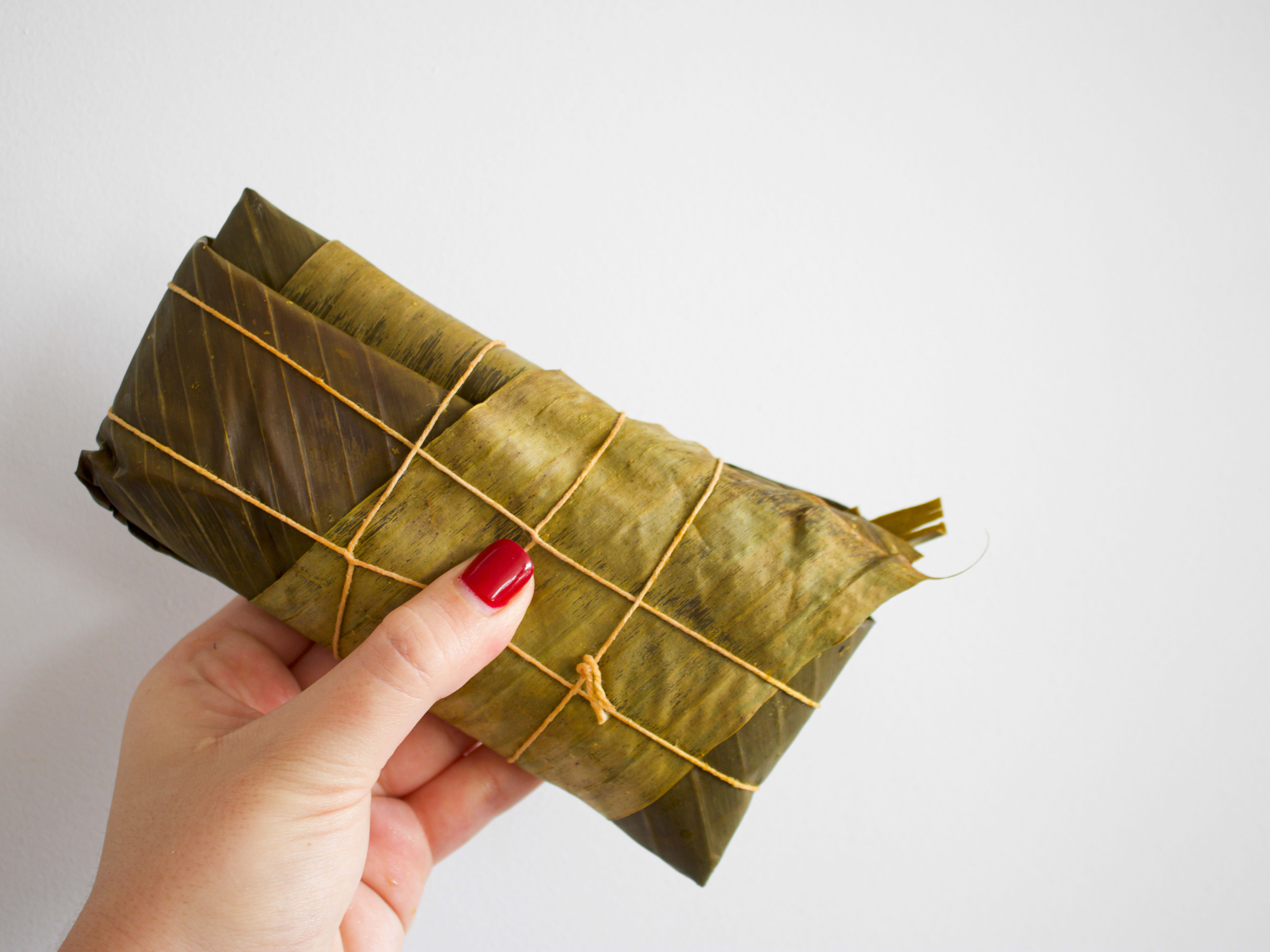
- Fold and tie. Fold the leaf over to encase the filling completely, then fold in the sides tightly. Wrap a second leaf around the outside for extra security. Tie firmly with twine — two lengths crossing each other, creating a grid, works best.
- Cook. Boil in a large pot of salted water for 1 hour to 1 hour 15 minutes. They need to be fully submerged. Remove with tongs, stand upright to drain for 2–3 minutes, then serve immediately.
Serve with: garlic sauce, a cold Polar beer, or pan de jamón (Venezuelan ham bread). Leftovers reheat beautifully — just boil for 20 minutes.
Frequently Asked Questions
What’s the difference between hallaca and tamale? Both are wrapped in leaves and made with corn dough, but hallaca uses pre-cooked cornmeal (not nixtamalized masa harina) and banana leaves instead of corn husks. The hallaca filling is also far more complex — with olives, raisins, capers, and multiple meats — and the dough layer is much thinner compared to most tamales.
Is hallaca only available at Christmas? Traditionally, yes. In Venezuela, families spend entire December weekends preparing hallacas in bulk. Many restaurants outside Venezuela follow this tradition and only offer them seasonally. However, growing demand means more Venezuelan restaurants now keep them available year-round — especially in Miami. If you spot them in July, they’re usually worth trying.
Can I freeze hallaca at home? Absolutely. In fact, most Venezuelan families intentionally make large batches to freeze. Always cook them first before freezing, then reheat by boiling from frozen for 1 hour 15 minutes. They keep well for up to 6 months in sealed bags.
How do I find the best hallaca near me using Google Maps? Search “Venezuelan restaurant” in Google Maps, then check recent reviews and look specifically for the word “hallaca.” Restaurants with Venezuelan owners and photos showing banana-leaf wrapped parcels are your strongest signals. Bonus tip: visiting a spot during December dramatically increases your chances of finding a freshly made batch.
What’s the easiest way to tell if a hallaca is authentic? Smell it first. A genuine hallaca carries the aroma of banana leaves even before you open it — earthy, slightly smoky, vegetal. The masa should be thin, not thick and doughy, and the filling should be visibly generous with olives, raisins, and slow-cooked meat. If it smells mainly of corn with little else going on, it’s been rushed.
How many hallacas should I order for a family gathering? They are filling. One hallaca is a solid meal on its own. For a group of four, six to eight hallacas with sides — black beans, rice, pan de jamón, and perhaps a salad — makes for a genuinely festive spread. If hallaca is the only dish, plan on two per person.
The Final Word on Finding the Best Hallaca Near You
Hallaca isn’t just food. It’s a story wrapped in a banana leaf — of colonial history, family labor, and a culinary tradition that has survived generations and a diaspora of millions. Every family has their own version. Every region adds its twist. And the best one you’ll ever eat might come from a market stall in Doral, a restaurant beside a London canal, or your own kitchen on a cold December weekend.
In my experience, the most memorable hallacas are always the ones made with patience — slow-cooked guiso, thin and carefully spread masa, properly sealed banana leaves. You can taste the care in every layer.
Whether you’re a Venezuelan searching for home or a first-time eater about to discover something extraordinary, finding the best hallaca is always worth the effort. Go find yours.
Read More Blog:
Best Salmorejo Near Me
Best Espinacas con Garbanzos Near Me