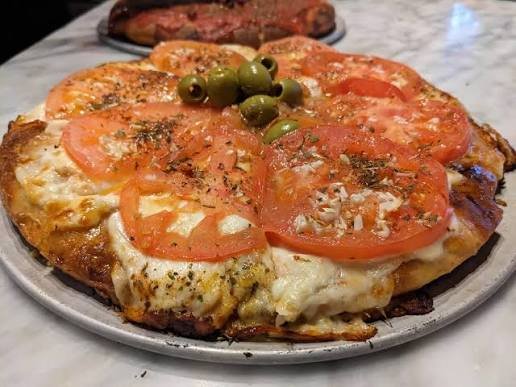

The first time a wedge of fugazzeta hit my plate — cheese oozing out the sides, onions practically caramelized into syrup — I understood why Argentines fight over which pizzeria on Corrientes is “the real one.” If you’ve typed best pizza porteña near me into Google, you already know this isn’t your average slice. It’s thicker, cheesier, and built for sharing over a bottle of Moscato.
Pizza porteña — literally “pizza from the port,” referring to Buenos Aires — is a different animal from a Neapolitan pie or a New York fold. It’s heavier, it leans on mozzarella the way Italians lean on tomato, and it was born from hungry Italian immigrants who decided that more cheese solved most problems.
This guide will help you find pizza porteña better than ever, whether you’re booking a table on Avenida Corrientes or hunting down the closest thing to it in your own city.
World’s Best Restaurants for Pizza Porteña

Güerrín — Buenos Aires, Argentina
Güerrín has fed Buenos Aires since 1932, and the wood-fired oven supposedly hasn’t gone cold since. Its quebracho-fed oven has never stopped working, producing thousands of pizzas a day while preserving artisanal techniques. Order the pizza al molde at the bar, eat standing up, and you’ve done Buenos Aires correctly.
El Cuartito — Recoleta, Buenos Aires
Open since 1934 and still drawing lines down the block most nights, El Cuartito is where locals settle the fugazzeta debate. Its loyal regulars insist it makes the best thin-crust fugazzeta in the city, an experience steeped in flavor, kindness, and nostalgia. The walls, plastered in old photographs and football memorabilia, feel like a scrapbook of the city itself.
Pizzería Banchero — La Boca, Buenos Aires
This is ground zero for fugazzeta. The fugazzeta traces back to 1893, when Don Agustín Banchero immigrated from Genoa and opened a bakery in La Boca, and in 1932 his son Juan opened Pizzería Banchero, which evolved into the stuffed fugazzeta we know today. Order the original, not a remix — this is the dish’s birthplace.
La Mezzetta — Villa Ortúzar, Buenos Aires
A neighborhood institution since the late 1930s, La Mezzetta is the connoisseur’s pick for fugazzeta rellena. Opened in 1939 as a direct rival to Banchero, it’s now considered one of the best places in the world to eat the stuffed cheese-and-onion classic, and gained a new wave of fame after appearing in Netflix’s Street Food: Latin America. Expect lines that snake down the block.
Banchero Miami — Florida, USA
Yes, the legendary La Boca pizzeria crossed an ocean. The original Banchero is still family-run after more than 90 years, and its Miami outpost is known as the spot where Lionel Messi reportedly orders his fugazza. It’s the closest thing to a Buenos Aires pilgrimage without the flight.
Florencio — Marylebone, London
Chef Diego Jacquet, raised partly in Patagonia, opened this Argentine-inspired pizzeria in late 2023. Florencio uses a 48-hour fermented dough blended from curated flours to create a well-defined, flavor-packed crust, and the menu includes a Fugazza topped with onions, provolone, oregano, and spicy honey. It’s a chef’s reinterpretation rather than a carbon copy — and it’s wonderful for it.
Best Restaurants in the USA for Pizza Porteña
Banchero — North Miami, FL. The original family recipe, transplanted. Go for the classic fugazza con queso and don’t skip the side of fainá if it’s offered.
Tatore — North Miami, FL. Formerly Bertoni, this spot serves both versions of the dish. Owner Maria Teresa Guarracino describes it as a specialty Argentines adapted with heavy onions and, in the stuffed version, extra layers of cheese.
Piola — Miami Beach, FL. Part of a broader Argentine-leaning pizza chain making inroads in South Florida, Piola serves a traditional fugazzeta pie that’s a reliable bet if you’re near Lincoln Road.
La Esquina Argentina — Corona, Queens, NYC. A cheerful neighborhood spot that pairs Argentine pizza with parrillada classics. Its thick, slightly salty fugazza crust topped with sliced onions closely echoes Italian focaccia, while the fugazzeta piles even more cheese on top.
Practical tip: Argentine pizza restaurants in the US cluster around cities with large Argentine communities — Miami and Queens especially. Search “Argentine pizzeria” rather than just “pizza” on Google Maps to filter out standard American pies.
Best Places in the UK for Pizza Porteña
Dedicated Argentine pizzerias are rare in the UK, which makes the few that exist worth seeking out.
Florencio — Seymour Place, Marylebone, London. The country’s most serious take on the style. A recent review noted the menu names pies after famous Buenos Aires pizzerias, like the “El Cuartito,” topped with San Marzano tomatoes, mozzarella, spicy salami, grilled peppers, and salsa verde. The crust here runs thinner than the classic porteña style, more New York than Buenos Aires bodegón, but the flavors and ambition are genuine.
Zoilo — Duke Street, Marylebone, London. Florencio’s parent restaurant, run by the same Argentine chef, leans more toward classic Argentine small plates but is worth combining with a Florencio visit on the same trip.
Buenos Aires Café — Blackheath, London. A family-run, homestyle spot built around the owners’ homesickness for the cafés of their childhood. The menu nods to the country’s Italian heritage with house-made pizzas alongside the steaks.
How to find the best pizza porteña near you in the UK using Google Maps: Search “Argentine pizza” or “fugazzeta” rather than “pizza,” check the photos tab for the telltale thick, cheese-stuffed crust, and read recent reviews — Argentine spots open and close quickly outside London, so freshness of reviews matters more than star count.
What Is Pizza Porteña & What’s In It?
Pizza porteña is Buenos Aires’ answer to the question “what if pizza had more cheese and more dough?” It was born when waves of Italian immigrants, many from Genoa, arrived in Argentina in the late 1800s and early 1900s and started baking pizza in bakery pans rather than proper ovens, since the city had few of those at the time.
The result: a thick, almost focaccia-like base known as media masa, topped with a generous, melted layer of muzzarella — a fattier, more flavorful cousin of Italian mozzarella made from cow’s milk.
Main ingredients include:
- Thick, slow-fermented dough (media masa or al molde style)
- A heavy, even layer of Argentine muzzarella
- Onions, for the fugazza and fugazzeta variations
- Tomato sauce (for classic mozzarella and napolitana versions)
- Oregano, parmesan, and sometimes olives or roasted peppers
A high-quality version has a dough that’s airy inside but holds its structure, cheese that’s stretchy rather than greasy, and onions cooked low and slow until they turn sweet, not raw and sharp. A bad version skimps on cheese, rushes the dough, and tastes like a regular pizza with extra toppings dumped on top — missing the point entirely.
How to Make Pizza Porteña at Home — Step by Step

Prep time: 2 hours (mostly dough resting) | Cook time: 25 minutes | Serves: 4-6
- Make the dough. Combine 500g flour, 1 tsp sugar, 7g instant yeast, and 1.5 tsp salt. Add 300ml warm water and 3 tbsp olive oil. Knead 8-10 minutes until smooth and elastic.
- First rise. Cover the dough and let it rest 1-1.5 hours until doubled. Pro tip: a longer, slower rise (even overnight in the fridge) gives you the springy, slightly sour bite of a proper porteña crust.
- Prep the onions. Slice 2-3 onions thinly and soak them in cold salted water for 20-30 minutes. This pulls out bitterness and is the single step most home cooks skip — don’t.
- Shape the dough. Press it into an oiled, deep round pan (a cast-iron skillet works well), pushing it up the sides slightly. Let it rest another 15 minutes.
- Layer the cheese. For classic muzzarella, cover the entire surface generously with shredded mozzarella — no gaps. For fugazzeta, split the dough into two layers and sandwich the cheese between them before adding onions on top.
- Bake. Place in a preheated oven at 230°C (450°F) for 20-25 minutes, until the crust is deep golden and the cheese is fully melted and bubbling at the edges.
- Finish. Drain and pat dry the soaked onions, scatter generously over the top in the final 5-10 minutes of baking so they char slightly without burning.
- Rest and serve. Let the pizza sit 5 minutes before slicing — the cheese needs a moment to set or it’ll slide right off the slice.
Common mistakes: Skipping the onion soak (bitter pizza) and overloading the tomato sauce, which makes the base soggy. Porteña pizza is about restraint with sauce and excess with cheese — not the other way around.
Serving suggestion: Pair with fainá (a thin chickpea-flour flatbread laid directly on top of the slice, Buenos Aires-style) and a glass of chilled Moscato or a cold Quilmes lager.
Frequently Asked Questions
What’s the difference between fugazza and fugazzeta? Fugazza is a single-crust pizza topped with onions and sometimes a layer of cheese on top. Fugazzeta takes it further, sandwiching cheese between two layers of dough before adding onions on top — essentially a stuffed-crust version.
Is pizza porteña the same as Argentine pizza? Pretty much. “Porteña” specifically refers to the Buenos Aires style, which is the dominant and most iconic form of Argentine pizza, though regional variations exist across the country.
Where can I find authentic pizza porteña near me outside Argentina? Look for Argentine-run restaurants rather than generic pizzerias claiming the style — cities with large Argentine communities, like Miami, tend to have the most reliable options. Search Google Maps for “Argentine pizzeria” plus your city.
Why does pizza porteña have so much cheese? The tradition traces back to Italian immigrants who, finding more affordable dairy in Argentina than they’d had in Italy, leaned into abundance as a point of pride. In my experience, that excess is exactly the appeal — it’s comfort food built on generosity.
Can I make pizza porteña without a pizza stone? Yes — a deep, oven-safe skillet or cake pan actually mimics the traditional “pizza al molde” pan style better than a flat stone does.
What should I drink with pizza porteña? Moscato, a sweet, lightly fizzy white wine, is the traditional pairing in Buenos Aires. Food lovers who’ve tried both agree that the wine’s sweetness cuts beautifully through the richness of the cheese.
Final Slice
Pizza porteña isn’t trying to be delicate — it’s built for big appetites, long tables, and arguments about whose neighborhood pizzeria does it best. Whether you’re tracking down the best pizza porteña near me in Buenos Aires, Miami, Queens, or Marylebone, or rolling out dough on your own kitchen counter, the goal is the same: more cheese, slow-cooked onions, and a crust with real character.
Go find your slice. Your taste buds — and probably your dinner guests — will thank you.
Read More Blog:
Best Tapas Tortilla Chips Con Chorizo Near Me